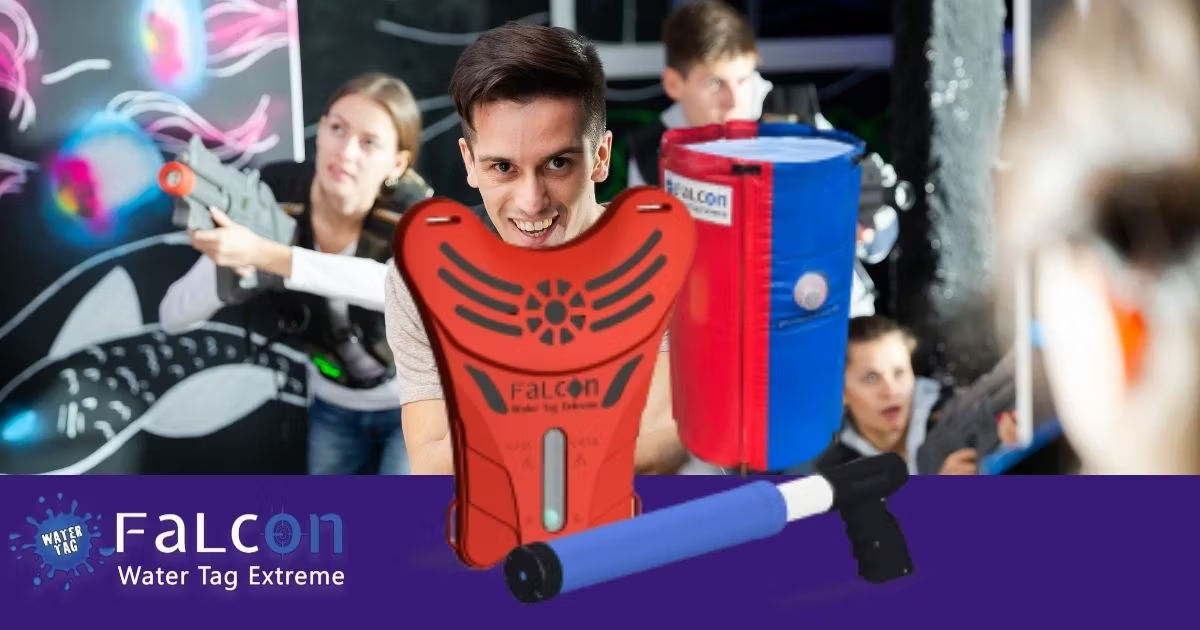
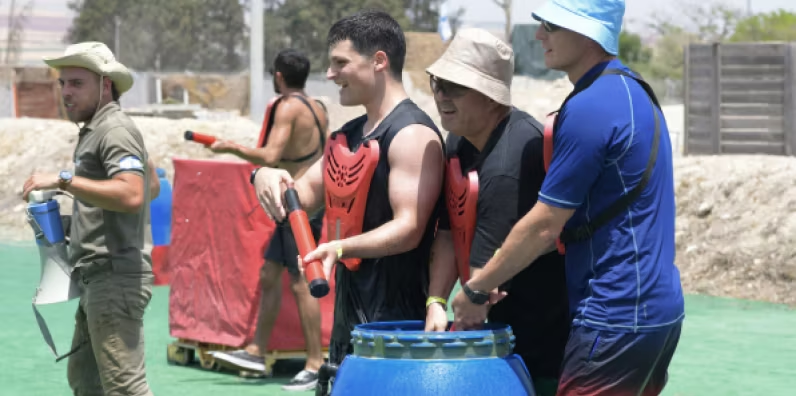
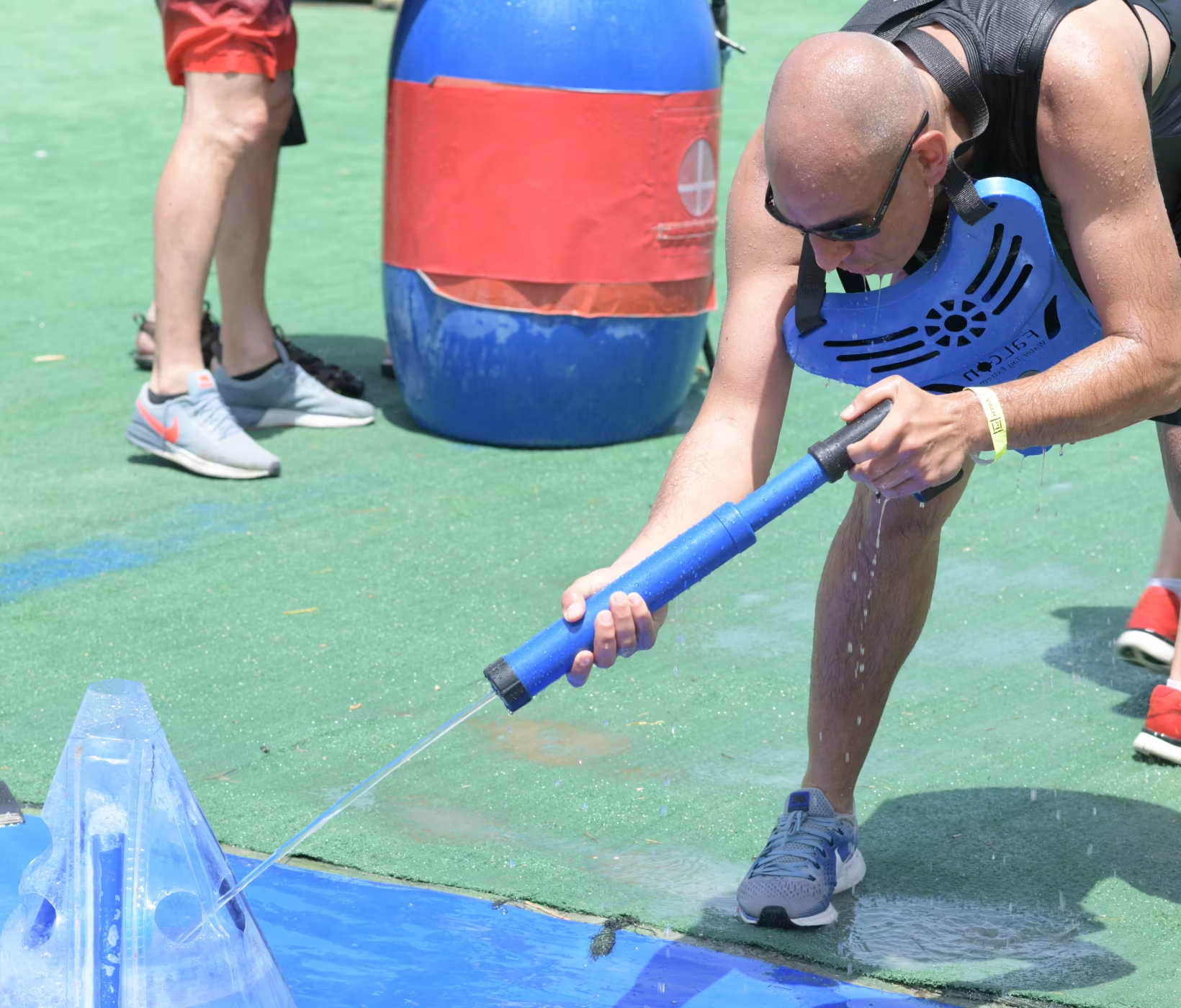
Most people researching commercial water tag equipment aren’t looking for a definition of the game. They already know what a water tag is: vests, launchers, inflatable barriers, a soaked and laughing crowd. What they’re trying to figure out is something harder to Google: which equipment will actually survive a summer of back-to-back groups, and which will quietly fall apart by August.
That’s the gap this article fills. Not “what is water tag,” but what operators discover once the gear is sitting in a field and 40 kids are lined up waiting to play.
Why “Commercial Grade” Means Something Different for Water Tag
Consumer-grade water toys are built to survive a weekend at home. Commercial equipment has to survive dozens of sessions a week, in direct sun, dragged across grass and gravel, packed wet into a trailer, and unpacked the next morning to do it again.
The practical difference shows up in a few specific places:
- Vest and launcher seams cheaper stitching fails under repeated pressure from the water reservoir, usually within the first month of daily use.
- Barrel material, a genuine water tag kit built for commercial rental, should use collapsible, puncture-resistant barrels that hold their shape after dozens of setup-and-teardown cycles, not just the first few.
- Valve and nozzle components see the most wear of any part in a water tag set, and low-grade plastic fittings are the single most common point of failure operators report.
A mistake newer operators make is buying based on package price per player rather than expected lifespan per unit. A slightly higher upfront cost on gear rated for continuous commercial use almost always beats replacing consumer-grade vests twice in one season.
What the Setup Actually Requires On-Site
On paper, water tag looks simple: unpack, inflate, play. In practice, the setup speed and staffing needs are what determine whether the attraction is profitable at the volume operators need.
A well-designed commercial water tag equipment package should realistically go from truck to playable field in around 25 minutes, and pack down in about 10, without requiring a trailer or specialized crew. That matters because most camps, resorts, and event operators are not staffing a dedicated setup team; they’re pulling from existing recreation staff who also need to run the game itself.
One detail overlooked by first-time buyers: a lean staffing model (one game manager plus two assistants) can run well over 100 players per hour when the field layout and rules are structured properly. Equipment that requires more hands just to operate erodes the margin before a single session is booked.
Choosing Between a Water Tag Kit and a Full Water Tag Set
“Kit” and “set” get used loosely across the industry, which causes confusion during purchasing. In practice, a starter water tag kit usually covers a smaller player count and a narrower range of game formats, while a full water tag set includes multiple barrel types, flag stations, and enough vests and launchers to run structured, multi-team scenarios.
| Consideration | Starter Water Tag Kit | Full Commercial Water Tag Set |
| Typical player capacity | 30 players | 60–100+ players |
| Game format variety | Limited (1–2 formats) | Multiple structured scenarios |
| Best fit | New operators testing demand | Camps, resorts, high-volume events |
| Expansion path | Add vests/launchers later | Already built for scale |
| Staffing needs | Small crew | Same small crew, higher throughput |
The scalability question is worth planning for before the first purchase. Equipment built to accept additional vests and launchers without a full system rebuild lets an operator start small and grow into demand rather than replacing the entire setup once a program outgrows its starting package.
Safety and Rules: The Part That Protects the Business, Not Just the Players
Because water tag is a structured, rules-based water tag game rather than open water play, it doesn’t carry the same liability profile as pool-based attractions; there’s no lifeguard requirement, for instance. But that only holds true if the equipment itself supports clear, enforceable rules.
Vests and launchers designed for ages 6 and up, with consistent hit-registration and minimal reliance on delicate electronics, reduce disputes on the field and keep games moving. Operators who add optional scoring add-ons, like sensor-based scoreboards, often find they reduce arguments over hits far more than they add entertainment value, a detail rarely mentioned in generic product descriptions.
Common Mistakes Operators Make When Sourcing Equipment
A few patterns show up repeatedly among first-time buyers:
- Underestimating maintenance time and buying gear with complex electronic components that fail in wet, high-use environments.
- Choosing package size based on ideal attendance rather than realistic average group size, leading to underused inventory.
- Skipping warranty terms, which matters more for watertag equipment than most outdoor gear given how much wear the vests and launchers absorb.
- Assuming any inflatable barrier will hold up barrel-grade material and stitching vary significantly between suppliers.
None of these mistakes are obvious until equipment is already in daily rotation, which is exactly why they’re worth flagging upfront.
Final Thoughts
The operators who get the most out of commercial water tag equipment aren’t the ones who bought the biggest package first; they’re the ones who matched equipment durability, staffing model, and expansion path to their actual attendance patterns. Falcon Water Tag’s package structure, from 30-player starter kits through 100-player commercial sets, is built around exactly that kind of gradual, low-risk scaling, backed by a two-year warranty that reflects genuine confidence in daily commercial use.
FAQ
1. How much does commercial water tag equipment cost to start a business?
Starter packages built for around 30 players typically represent the lowest entry point, with pricing scaling up for 60- and 100-player commercial sets depending on included barrels, vests, and accessories.
2. Is a water tag kit different from a full water tag set?
Yes. A kit is usually a smaller starter bundle. It covers fewer game formats. A full set is bigger. It includes the barrels, flags, and the vest count you need for several set games when more players join.
3. Do I need lifeguards for a water tag attraction?
No. Water tag is run as a set, rules-driven activity. It is not like open water play. For that reason, it does not come with the same lifeguard needs as pool-style attractions. As long as the gear allows clear rule checks and safe play, you should be fine.