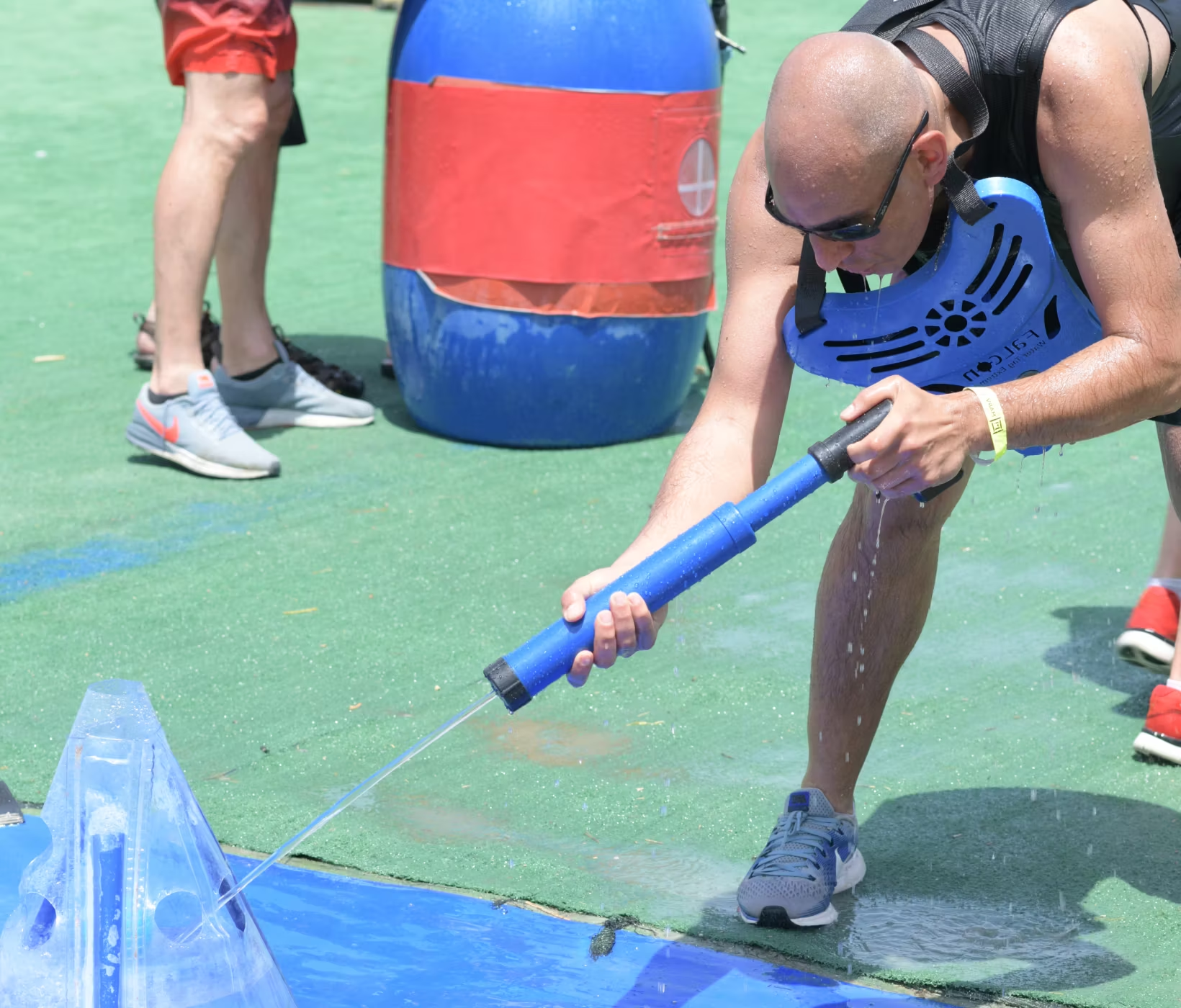
Operators researching water sports tag are usually past the “is this fun” question when they’ve seen the videos, they know groups love it. What they actually need is harder to find: how this category fits alongside existing attractions, what equipment quality actually looks like, and which suppliers understand commercial use versus backyard play.
That’s the gap most articles on this topic don’t close. Below is what actually matters once you’re deciding whether to add it, and how to source it without regretting the purchase six months in.
Where Water Sports Tag Fits in a Recreation Lineup?
Water sports tag sits in an unusual spot: it’s structured enough to run like an organized game, but physical and messy enough to feel like a genuine outdoor attraction rather than a supervised activity. That combination is exactly why camps, resorts, and event operators add it; it fills the gap between passive water play (splash pads, pools) and higher-liability activities that need lifeguards or specialized certification.
A detail overlooked by operators new to the category: because it’s rules-based rather than open water play, it typically doesn’t carry the same lifeguard requirement as pool attractions. That changes the staffing math considerably compared to almost anything else involving water on-site.
Water Jelly Gun vs. Vest-and-Launcher Systems
Anyone researching this space runs into two different equipment families fairly quickly, and the difference matters more than most product pages explain.
A water jelly gun is a handheld blaster loaded with soft, biodegradable water-absorbing gel beads closer to a paintball-style mechanic than a soaking. It’s low-cost to source and easy to demo, which is why it shows up often in smaller pop-up activations. But it comes with real trade-offs: gel bead cleanup on-site, consumable resupply costs per session, and less structured gameplay, which makes it harder to run as a repeatable, ticketed attraction at scale.
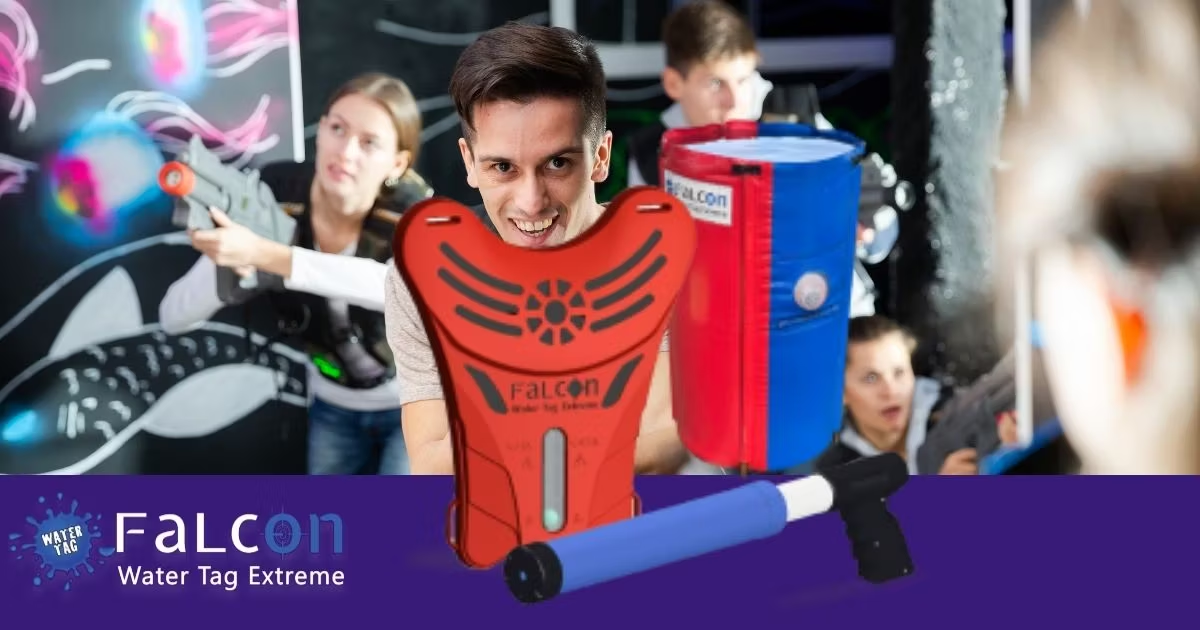
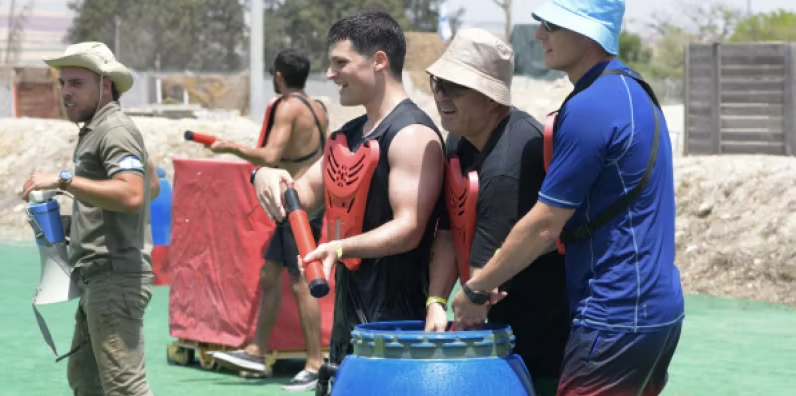
Vest-and-launcher water tag systems work differently with reusable water reservoirs, structured hit-registration, and no consumables to restock between sessions. For operators running back-to-back groups daily, that difference in per-session overhead adds up fast. It’s worth mapping out expected session volume before choosing between the two, because the economics diverge quickly once you’re running more than a handful of sessions a week.
What “Commercial” Actually Means When Sourcing Equipment?
The term commercial water park equipment gets used loosely across supplier catalogs, and it causes real confusion during purchasing. Consumer-grade gear is built to survive a weekend; commercial gear has to survive daily setup, teardown, direct sun exposure, and repeated handling by staff who are focused on running the game, not babying the equipment.
In practice, the components that separate genuinely commercial-grade gear from relabeled consumer products are:
- Seam and stitching quality on vests, which fail under repeated pressure well before the fabric itself wears out.
- Barrel and barrier material, where puncture resistance and shape retention after dozens of collapse-and-inflate cycles vary enormously between manufacturers.
- Valve and nozzle components, the single most commonly reported failure point across the industry.
A warranty length is often the fastest signal of how confident a manufacturer actually is in their own build quality equipment rated for daily commercial use should be backed accordingly, not covered under the same terms as a backyard toy.
Evaluating Water Park Equipment Suppliers
Not all water park equipment suppliers operate the same way, and the differences show up long after the purchase, not during it. A few questions worth asking before signing anything:
| Evaluation Point | What to Ask | Why It Matters |
| Warranty terms | Length and what’s actually covered | Signals real confidence in commercial durability |
| Operational support | Do they provide staffing/setup guidance? | Determines how fast you can launch and run smoothly |
| Scalability | Can you add capacity without replacing the system? | Avoids a full rebuild once demand grows |
| Game format variety | How many structured scenarios are included? | Keeps repeat visitors engaged over a season |
| Lead time and logistics | Realistic delivery windows, not best-case | Prevents missed launch dates |
Operators frequently underweight the operational support question. Equipment that arrives without field layout guidance, staffing recommendations, or training resources puts the entire launch burden on internal staff who may have never run this kind of attraction before.
A Common Mistake When Comparing Water Park Suppliers
The most frequent misstep among first-time buyers comparing water park suppliers is anchoring the decision on price per unit rather than cost per season of reliable use. A cheaper package that needs partial replacement mid-season, or that lacks the operational guidance to run efficiently, often ends up more expensive than a commercial-grade system with a longer warranty and built-in support.
The more useful comparison is the total cost of running a season: equipment durability, staffing efficiency, expected downtime for repairs, and how easily the system scales if attendance exceeds projections.
Final Thoughts
Water sports tag earns its place in a recreation lineup because it’s genuinely differentiated, physical, structured, and appealing across a wide age range without the liability overhead of open water attractions. The operators who get the most value from it are the ones who source equipment built for daily commercial use, not repurposed consumer gear, and who choose suppliers offering real operational support rather than just a box of vests. Falcon Water Tag’s package structure scalable from smaller starter setups to full commercial systems, backed by a two-year warranty reflects that same standard.
FAQ
1. What does “water sports tag” mean?
It is an outdoor game with set rules. Players wear water vest units and use launchers to tag other players. Most events are run like laser tag, but the main difference is water instead of light or other projectiles.
2. Is a water jelly gun the same as water tag gear?
A water jelly gun is a hand-held toy blaster that fires gel beads. Most of them are made for small events where setup time is short. Water tag games usually use reusable vests and launchers made to handle many rounds. They are built for longer commercial sessions and can be used for repeated play.
3. What should I check when buying commercial water park equipment?
Look closely at the seam material and the barrel build. Also examine the valves. These parts are the ones that tend to break first during heavy daily use. Warranty length matters too. It often shows how much confidence the maker has in the product.